
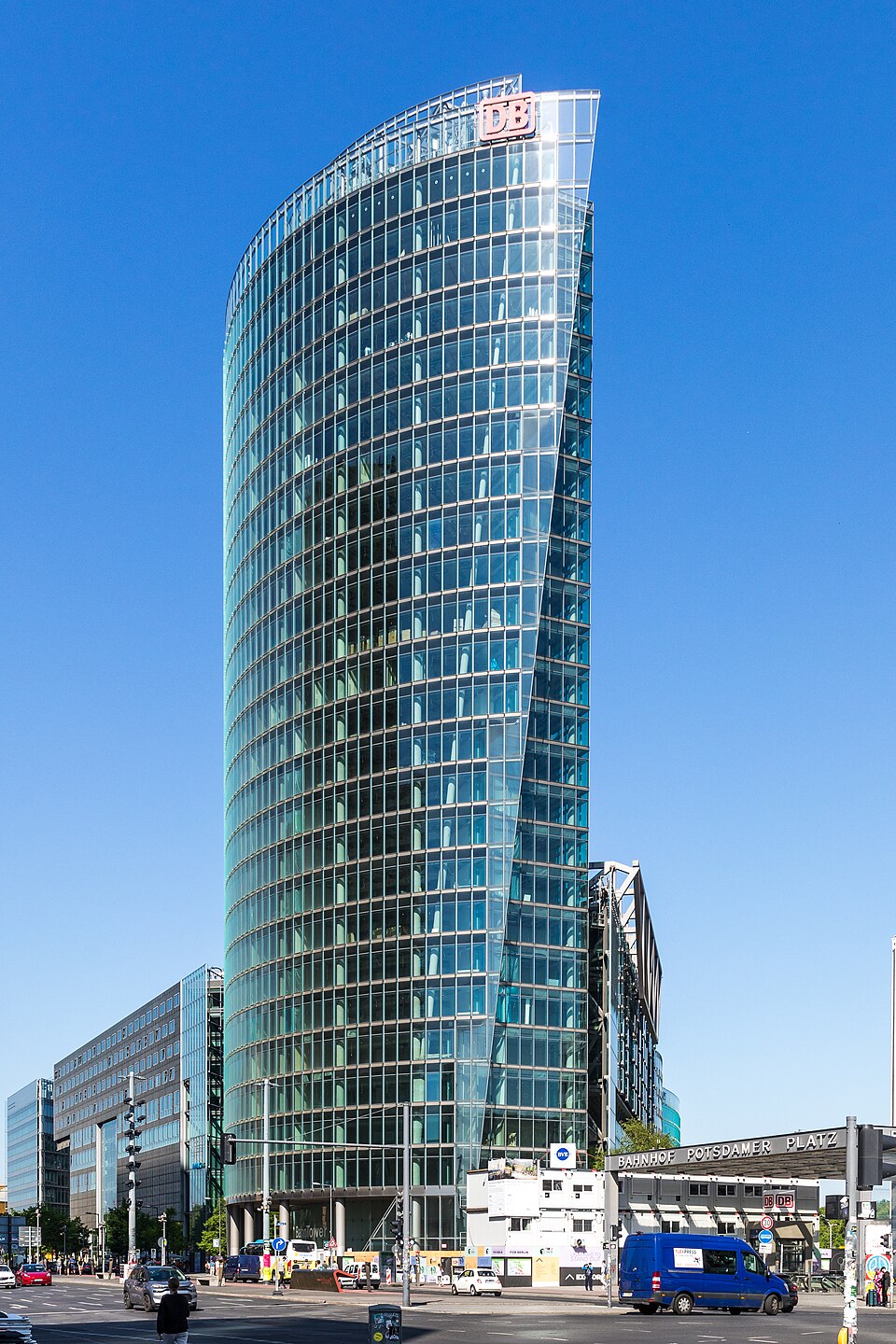
Raimond Spekking / CC BY-SA 4.0
| ➣ According to media reports, the new CEO of the vertically integrated German state-owned rail incumbent DB (Deutsche Bahn) wants to “eliminate half of the top management posts”. ➣ If every second top manager can be dismissed at once and the company is still expected to function, then this is not a sign of fine-tuning ➣Instead, it is proof that the organisation has become structurally bloated and overly centralised. However, cutting the bureaucracy at the top is not enough. Recently, on 27th November 2025, the official German Federal Audit Office (Bundesrechnungshof) stated that “in reality, funding of the rail network has by now turned into a ‘bottomless pit’. According to reports from the German Parliament, between 2019 and 2023 roughly €38.5 billion of tax-payer money were spent on the German rail infrastructure – yet many recent media reports confirm that the state of the network remains in a desolate condition. This raises the simple but uncomfortable question: where did all the money go? Was it used for other things inside the DB Group? For instance, a bloated bureaucracy that is disconnected from what passengers actually need? Nick Brooks, Secretary General of ALLRAIL, says: “There must be hard, enforceable performance targets for any rail entity that receives public money. Every single euro, pound or dollar of taxpayer funding must be explicitly linked to measurable improvements in capacity, punctuality and asset condition – with clawbacks if targets are missed. And there must be a complete ban on using infrastructure money to cross-subsidise other parts of the vertically integrated rail body” |